
20 Fascinating Facts About Moon You Don’t Know
Quick answer: The Moon is about 238,900 miles (384,400 km) from Earth and drifts about 1.5 inches (3.8 cm) farther away every year. It always shows the same face to Earth, and its gravity drives our ocean tides. This post covers 20 surprising facts like these.
The Moon is a really beautiful thing in our life but we know only a few things about it. Are you interested to learn the 20 incredible facts about the Moon which will definitely change your entire view of the Moon?
In ancient times people kept track of time from the Moon. They rely on its phases to measure days and months. Is there water and any life exists on the moon?
In this article we will share with you the most important and unexpected facts about the Moon. If you’re curious about the Moon’s facts, then keep reading.
Want to share tonight’s moon? Copy the current phase of the moon emoji in one tap.
20 Fascinating Facts About Moon
Below we are discussing the 20 interesting facts about the moon that you should know:
- The Moon is Earth’s natural satellite
- The Moon was called Luna
- Life on the Moon
- Orbit and Rotation
- Earth Moon has no its Moon
- The Moon has no Rings
- Atmosphere on the Moon
- The Moon has three layers
- Moon has no surface
- Temperature on the Moon
- The water is frozen in dark sites
- New Moon Phase
- Eclipse of the Moon
- The Moon Formation
- The Moon has lower gravity
- The Moon controls tides of the oceans
- The Moon has an egg-like shape
- The bright and big supermoon
- Footmarks on the Moon
- The Moon does not make its light
1. The Moon is Earth’s natural Satellite
The Moon is a natural and permanent satellite revolving around Earth making it very special and beautiful.
2. The Moon was called Luna
In Latin the Moon was called Luna, which is used to describe anything related to the Moon.
Our Moon shares its name with all other moons because people didn’t know other moons existed until an Italian astronomer Galileo Galilei discovered four moons orbiting around Jupiter in 1610.
3. Life on the Moon
There is no life present on the Moon. Scientists set many missions there but they have not found any living things and later they found ice in the dark holes near the poles.
In the future, humans will be able to live on the Moon because of this water.
4. Orbit and Rotation
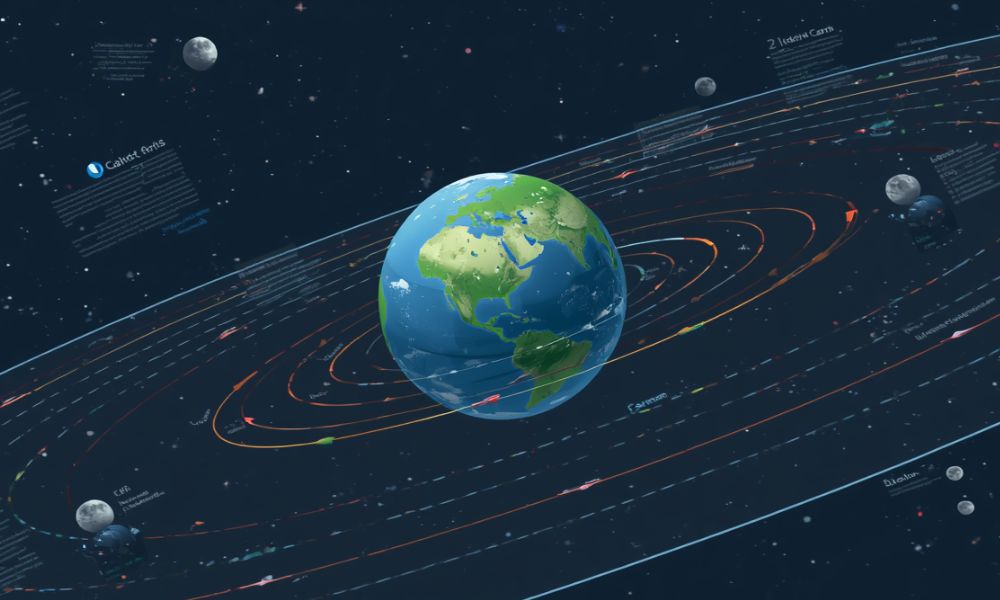
The Moon’s rotation and revolution about the earth are synchronized. People often confuse one side of the moon with the dark side; this is wrong as the sun shines the moon at different points of time and therefore the back side cannot be seen from earth.
The moon takes 27 days to complete its rotation around earth.
5. Earth Moon has no Moon
There are no moons around the Earth’s moon. While other planets in our solar systems have numerous natural satellites.
6. The Moon has no Rings
The moon has no rings like other planets which have visible rings made up with dust and air. It’s the only natural satellite with no rings.
7. Atmosphere on the Moon
The Moon has a very thin and weak atmosphere that provides no protection from solar radiations. The atmosphere of the Moon contains dangerous gases like helium, neon, argon and small amounts of sodium and potassium that creates difficulty in breathing.
8. The Moon has three layers
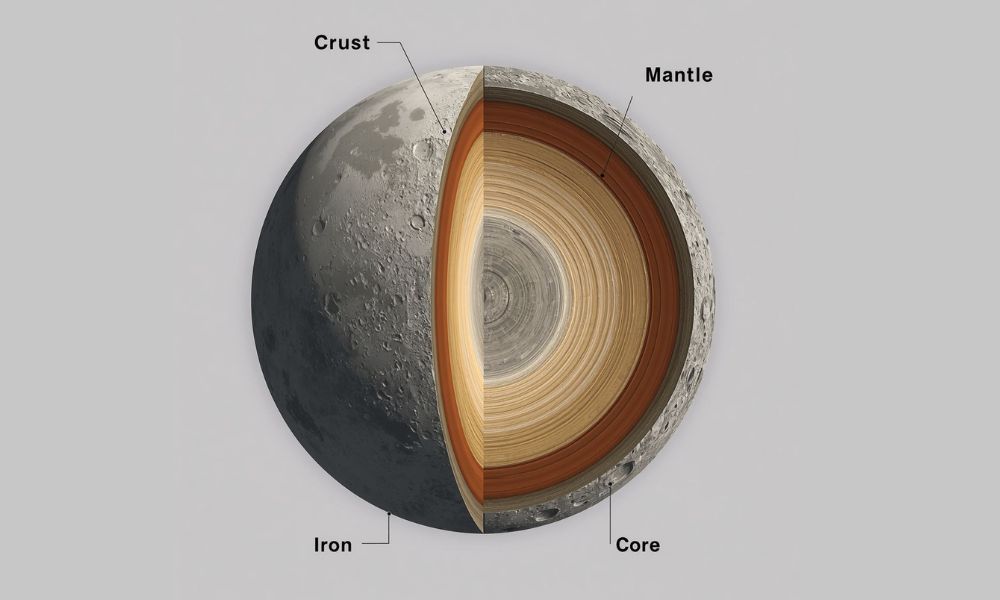
The Moon has three main layers, which are crust, a core and a mantle.
The core of the moon contains mainly iron and it is relatively smaller compared to earth. Around the core is the mantle which consists of rocks that are slightly melted and contain magnesium and iron.
The final layer of the moon is the crust, which is relatively thick on the far side of the moon and thin on the near side. The crust is made up of oxygen, silicon and aluminum among other elements.
9. Moon has no surface
The Moon has almost no surface, so space rocks like asteroids, meteoroids and comets keep hitting its surface and break the Moon into dust and small rocks.
The Moon has light areas (called highlands) and dark regions (called maria) . These dark regions were once filled with lava billions of years ago.
10. Temperature on the Moon
The Moon has different temperatures at different times, it has hot temperature in sunlight and cold in night time. The temperature on the Moon is higher than 250°F to lower than -410°F.
11. The Water is frozen in dark sites
There is a famous myth that the Moon has no water but many space missions proved it wrong. The water is present on the Moon but not in flowing rivers and oceans. It is present in frozen ice form.
12. New Moon phase
During the new Moon day, the Sun , Moon and the Earth come along a straight line. Here the Sun seems to be at the back of the Moon and this makes us visualize just a small part of the Moon in the Sky.
13. Eclipse of the Moon
A lunar eclipse occurs at the full Moon phase when the Earth comes between the Sun and the Moon and the Earth’s shadow falls on the Moon.
14. The Moon Formation
According to scientists, the Moon was formed billions of years ago after a collision of a Mars-sized object with the Earth.
15. The Moon has lower gravity
Gravitational force on the Moon is lesser than that of gravitational force on Earth. This is the reason why astronauts can leap to greater heights on the Moon.
16. The Moon controls tides of the oceans
The tides of the ocean on Earth are controlled by the Moon through its gravitational pull.
17. The Moon has an egg-like shape
All of us know that the Moon is round but it’s not true. The Moon has an oval-like shape and its one end is pointing towards Earth due to the gravitational force.
18. The bright and big supermoon
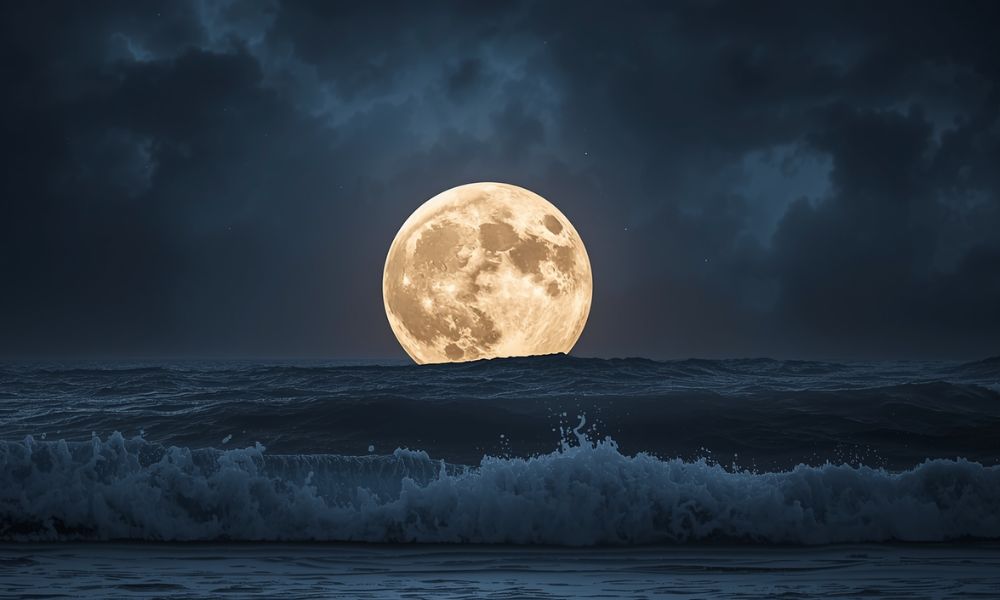
When the Moon comes closer to the earth, it seems brighter and bigger than the usual full Moon which is known as super moon.
19. Footmarks on the Moon
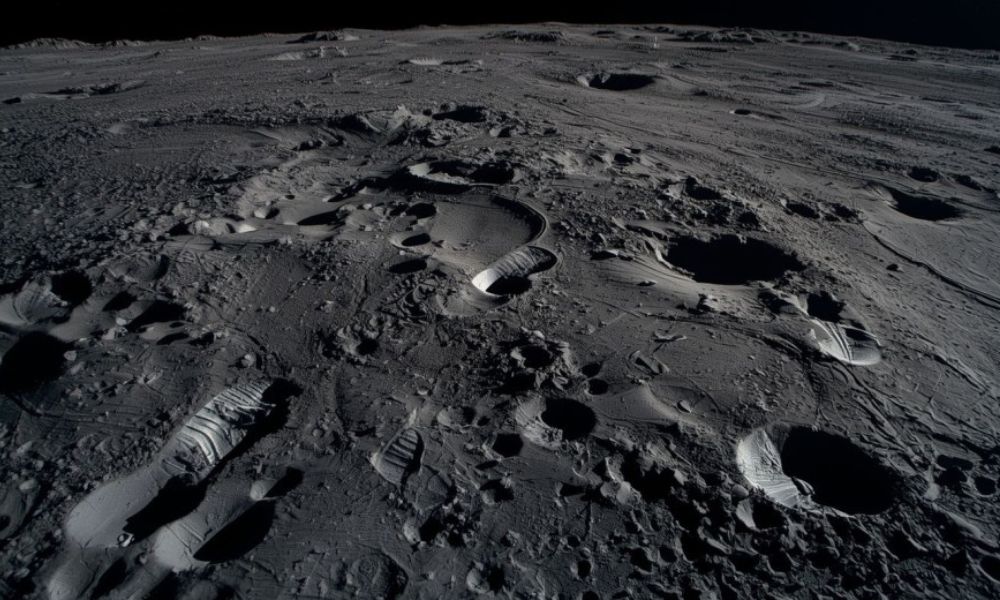
In 1969, the Apollo astronauts left their footprints on the Moon that can stay on the Moon for a long time even for millions of years. This is because the Moon has no air and water to erase them. But tiny rocks can fade them slowly with time.
20. The Moon does not make its light
We all thought that the Moon has its own light but it’s wrong. The Moon provides us light by reflecting the sunlight.
We see a dark moon in starting dates but the size and light of the moon gradually increases till the Full Moon appears. Then the moon starts fading and becomes dark at the end of the moon. Does the moon brighten on its own? Is there any phenomenon on the moon?
Yes, there is a phenomenon on the Moon that brightens the Moon by reflecting the sunlight. In the starting dates, the moon is not exposed to the sun due to the earth. So as the date passes, the more face of the moon is exposed to the sun and we see a bright light from the moon which is actually a reflection of sunlight.
Conclusion
The Moon is more than a bright thing in the night sky. It is a natural satellite that affects life on Earth in many ways. The Moon controls ocean tides and helped people keep track of time long ago.
We learned interesting facts about the Moon that it does not have air, water, light and life like Earth. Despite all this the Moon is still very important and mysterious. The Moon formed after a collision and goes through phases. Its surface has craters.
All these things make the Moon an amazing object in space. People also believes that moon phases helps in finding their moon soulmate. Besides this, moon helps us understand the universe and space better.